How to Receive SMS Verification Codes Without Using Your Real Phone Number
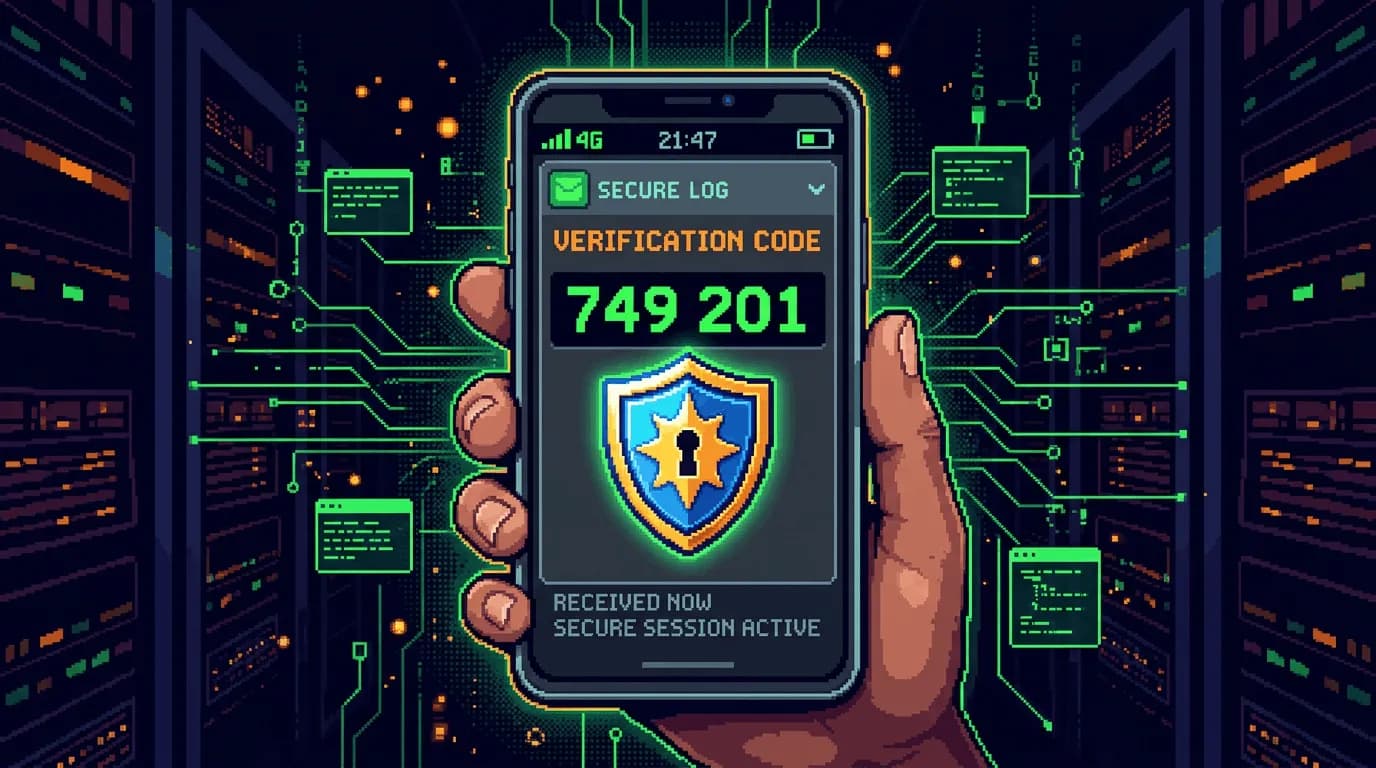
TL;DR. Free SMS receivers, VoIP apps, and disposable SIMs all fail in 2026: public, blocked, or ID-gated. The clean fix is a rental phone number on a real carrier, paid in Bitcoin or Monero with no signup: $12 buys 3 months on a private UK mobile line that works with WhatsApp, Telegram, and Signal.
Every online service wants your phone number. Sign up for WhatsApp: phone number. Create a Telegram account: phone number. Register for a cloud provider, a crypto exchange, a new email address: phone number, phone number, phone number.
For most people this is just an annoyance. But if you care about privacy, it's a real problem. Your phone number is one of the strongest identifiers that exists. It's tied to your government ID through your carrier. It connects your accounts to each other. And once a service has it, you can't take it back.
So what are your actual options if you need to receive an SMS verification code but don't want to hand over your real number? The short answer: rent an anonymous phone number and pay with Bitcoin. Here's the full breakdown.
The Problem With SMS Verification
SMS verification was designed to prove you're a real person, not a bot. But somewhere along the way it became an identity collection mechanism. When you enter your phone number to receive a 6-digit code, you're not just proving you're human. You're also linking your account to a number that traces back to your real identity through your mobile carrier.
This matters because phone numbers are routinely used for cross-service tracking. Data brokers buy carrier records. Leaked databases get correlated by phone number. A single number ties together your social media accounts, your banking apps, your email, and your messaging, creating a detailed profile of who you are and what you do.
The obvious question: can you receive SMS verification codes on a number that isn't tied to your identity?
Methods That Don't Actually Work
Before covering what does work, let's save you some time on the approaches that seem promising but fall apart in practice.
Free online SMS receivers (like Quackr, receive-smss.com, and dozens of similar sites) display incoming messages publicly. Anyone can see the codes sent to those numbers. Services like WhatsApp, Telegram, and Signal actively block these numbers because they've been used millions of times. Even if a code does arrive, someone else can grab it before you do. These sites exist to show ads and collect traffic; they're not a real solution.
Disposable SIM cards work in some countries but are becoming harder to get anonymously. The EU requires ID for SIM registration. The US, UK, and many Asian countries have similar rules or are implementing them. Even where anonymous SIMs exist, you need to physically buy one with cash and put it in a phone, which defeats the purpose if you're trying to do this digitally.
VoIP numbers from Google Voice, TextNow, or similar apps are increasingly rejected by services that check whether a number is a mobile or VoIP line. WhatsApp, Signal, and many banks specifically block VoIP numbers. And these apps require their own verification to sign up, which moves the problem rather than solving it.
eSIMs from regular carriers still require identity. Even travel eSIM providers like Airalo or Holafly don't give you a phone number; they provide data only. (If you do need a no-KYC eSIM for mobile data, see our comparison of no-KYC eSIM providers.)
What Actually Works: Rental Phone Numbers With Crypto Payment
The approach that solves this cleanly is renting a real mobile phone number from a provider that doesn't require your identity and accepts cryptocurrency for payment.
At nadanada, we offer exactly this. You pay with Bitcoin over the Lightning Network (or Monero, or USDT/USDC), and you get a UK (+44) phone number that can receive SMS messages. No account. No email. No name. No ID.
The number is yours for 3 months. You can use it to register for any service that sends SMS verification codes, check back for password reset messages, and renew it when it expires. The cost is $12 for 3 months, paid in a single Lightning transaction that settles in milliseconds.
Here's why this is different from the methods above: it's a real mobile number on a real carrier network, so services don't block it. It's private to you, so nobody else can see your codes. And because you pay with crypto, neither we nor anyone else can connect the number back to your identity.
Step by Step: Registering for Services Without Your Real Number
The process works like this in practice.
Getting the number. Go to the nadanada phone numbers page. Select a phone number. Pay the Lightning invoice from any Bitcoin wallet: Phoenix, Wallet of Satoshi, Zeus, BlueWallet, or any other Lightning-capable wallet. The number activates immediately after payment.
Using it for verification. Enter your new +44 number when a service asks for phone verification. The service sends an SMS with a code. Go back to nadanada, enter your number, and view the incoming message. Type the code into the service. Done.
Managing ongoing verification. Because the number lasts 3 months (and can be renewed), you can use it for ongoing two-factor authentication, password resets, and any other SMS that services send. Rather than a one-time disposable number, it's a persistent private number.
Which Services Accept UK (+44) Numbers
UK mobile numbers are widely accepted for SMS verification. Here are the major services where they work:
Messaging apps: WhatsApp, Telegram, Signal, and Viber all accept UK numbers for registration. This is the most common use case: people who want a messaging account that isn't connected to their personal phone number.
Email providers: ProtonMail, Tuta (formerly Tutanota), Gmail, and Outlook all accept UK numbers for verification during signup or for adding two-factor authentication.
Social media: Twitter/X, Instagram, Facebook, Reddit, and LinkedIn accept UK numbers for account verification.
Cloud and developer services: AWS, Google Cloud, DigitalOcean, and most SaaS tools accept UK numbers for account creation and 2FA.
Crypto exchanges: Many exchanges accept UK numbers for 2FA (though KYC exchanges will still require ID documents separately; the phone number alone won't make those anonymous).
The general rule: if a service sends SMS to international numbers, a UK +44 number will work.
Why Lightning Network and Not a Credit Card
We accept credit cards too, through Apple Pay and Google Pay. But if privacy is your goal, paying with a credit card connects your payment identity to your phone number, which partially defeats the purpose.
Bitcoin Lightning payments are pseudonymous. The Lightning Network doesn't attach your name, email, or billing address to the payment. The transaction settles instantly, costs fractions of a cent in fees, and creates no paper trail that connects you to the number.
If you've never used Lightning before, the easiest way to start is downloading a mobile wallet like Phoenix or Wallet of Satoshi. Buy a small amount of Bitcoin (many wallets let you buy directly in-app), and you can pay Lightning invoices within minutes.
For maximum anonymity: buy Bitcoin peer-to-peer on a no-KYC exchange like Bisq or RoboSats, send it to your Lightning wallet, and use it to pay for your number. At no point does your real identity touch any part of the chain.
For Developers: Automate SMS Verification via API
If you're building an application that needs phone verification, or you're working with AI agents that need to create accounts autonomously, nadanada provides a full REST API for renting numbers and reading incoming SMS programmatically.
The flow is straightforward:
- Call the purchase endpoint to request a number and receive a Lightning invoice
- Pay the invoice programmatically
- Call the completion endpoint to activate the number
- Poll the messages endpoint to read incoming SMS
A minimal Python example:
import requests
import time
import re

NADANADA = "https://nadanada.me/api/v2"

# Step 1: Request a phone number
res = requests.post(f"{NADANADA}/phone/purchase", json={})
data = res.json()["data"]
user_id = data["userId"]
invoice = data["paymentRequest"]
payment_hash = data["paymentHash"]

# Step 2: Pay the Lightning invoice (using your preferred method)
# e.g., subprocess.run(["lncli", "payinvoice", "--force", invoice])

# Step 3: Complete the purchase
res = requests.post(f"{NADANADA}/phone/complete", json={
    "paymentHash": payment_hash,
    "userId": user_id
})
result = res.json()["data"]
phone = result["phoneNumber"]
secret = result["userSecret"]  # Save this (only returned once)

# Step 4: Poll for incoming SMS
def wait_for_otp(phone_number, timeout=120):
    encoded = phone_number.replace("+", "%2B")
    start = time.time()
    while time.time() - start < timeout:
        res = requests.get(
            f"{NADANADA}/phone/messages/{encoded}",
            params={"userId": user_id, "userSecret": secret}
        )
        messages = res.json()["data"]["messages"]
        if messages:
            match = re.search(r'\b(\d{4,8})\b', messages[0]["content"])
            if match:
                return match.group(1)
        time.sleep(5)
    return None

otp = wait_for_otp(phone)
print(f"Received OTP: {otp}")
Full documentation is available on our API documentation page.
Frequently Asked Questions
Can I receive SMS from any service on a rental phone number? Yes. The number is a real UK mobile number on a real carrier network. Any service that sends SMS to international numbers will work, including WhatsApp, Telegram, Signal, and most online platforms.
How long does the number last? 3 months from activation. You can renew it before it expires to keep the same number.
Can other people see my messages? No. Unlike free public SMS receivers, your rental number is private to you. Only you can access the incoming messages using your credentials.
What if I need a number from a different country? We currently offer UK (+44) numbers. For services that require a specific country's number, this may not work, but UK numbers are accepted by the vast majority of global services.
Do I need to create an account? No. There's no signup form, no email, no password. The first purchase automatically generates a user ID. You use that ID plus a secret key (returned on first purchase) to manage your number and read messages.
Can I use the same number for multiple services? Yes. The number is yours for the full rental period. Use it for as many verifications as you need.
What payment methods are accepted? Bitcoin Lightning (5% discount), Bitcoin on-chain, Monero, USDT, USDC, credit card, Apple Pay, and Google Pay. Lightning is the fastest and most private option.
Is this legal? Using a phone number for account verification is legal. The question of whether a specific service's terms allow third-party numbers varies by service; read their terms if that concerns you. From our side, we provide a legitimate telecommunications service with no identity requirements.
Beyond Phone Numbers: The Full Privacy Stack
A phone number is often just one piece of the puzzle. If you're setting up accounts privately, you probably also want:
A VPN to prevent your IP address from being logged during signup. nadanada offers WireGuard VPN access starting at $0.10 per hour, payable with the same Lightning wallet you used for the phone number.
An eSIM if you need mobile data without a carrier contract tied to your name. nadanada offers no-KYC eSIM data plans in 200+ countries, starting at $0.99.
All three services (phone numbers, VPN, and eSIM) are available from a single provider, payable with a single payment method, with no accounts or identity required.
Related guide: How to Get SMS Verification Without Your Real Phone Number
nadanada provides anonymous VPN, eSIM, and phone number services payable via Bitcoin Lightning Network. No accounts. No KYC. Starting at $0.99.